
Jupiter’s coastal setting is a gift—salt air, bright skies, and year-round outdoor living. It’s also a proving ground for synthetic turf. Afternoon downpours, king tides, tropical systems, and the long, humid arc of summer will test drainage, seams, infill, and edges. The goal of this playbook is simple: give homeowners a clear, repeatable plan for before, during, and after storm events so your turf stays safe, odor-free, and great-looking without jumping to full replacement. From smart pre-storm prep to the precise order of post-storm cleaning and targeted repairs, you’ll find what to do, when to do it, and why the sequence matters.
A quick orientation for newcomers: artificial turf is an engineered system—fibers and thatch on a permeable backing over a compacted, free-draining base. Storm resilience comes from keeping that pathway open (no silt or organics clogging it), maintaining correct tension and anchoring, and addressing small defects before they become structural. With the right habits, even a hard-hit lawn rebounds fast.
Hurricane Readiness in Three Layers
Think in layers—Surface, Structure, Surroundings—to cover everything that affects your turf in a storm.
Surface (what you see): fibers, thatch, infill.
Structure (what you stand on): seams, backing, anchoring, sub-base.
Surroundings (what can hurt it): furniture, planters, gravel, grills, low-E window reflections, gutters, drains, nearby mulch beds.
Addressing all three layers limits projectile damage, prevents clogging, and shortens cleanup time.
Pre-Storm Prep (48–12 Hours Before Impact)
1) Clear & Stage
Remove projectiles: Patio furniture, toys, planters, gravel decor, drip trays, and loose edging stones should not sit on turf in high winds. Move them indoors or strap them.
Protect the surface: If you must stage heavy items on hardscape, lay down pads or boards—never on the turf.
Isolate infill: If you have loose infill bags, seal and store them high and dry.
2) Brush for Drainage
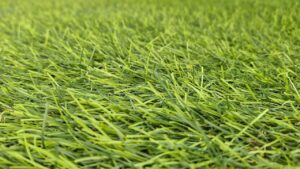
Power broom or stiff-broom the field so fibers stand upright. It sounds cosmetic, but upright blades expose the perforated backing and thatch, helping water sheet through instead of ponding on flattened fibers.
3) Edge & Seam Check
Walk the perimeter. Re-anchor any sections that lift with a putty-knife probe. Tight edges reduce water and debris intrusion under the carpet.
Scan seams. If you can see daylight or fibers peel apart along a straight line, note the location for a post-storm re-bond; don’t attempt an adhesive job with weather imminent.
4) Drainage Paths
Clear drains and outfalls. Remove palm fronds, seed pods, pine needles, and mulch that can wash onto the lawn.
Divert runoff. Aim downspouts away from turf sections with minimal slope.
5) Water & Electricity
Irrigation off. Over-saturation provides no benefit once tropical moisture arrives.
GFCI awareness. Any outdoor power near turf (string lights, pumps, etc.) should be weather-rated and secured.
6) Heat Reflection Hazards
Low-E glass audit. Storm shutters or temporary screens can block intense reflections that may otherwise pucker fibers if the sun reappears quickly between bands.
Pro tip: If you keep a multi-property checklist, it’s efficient to consolidate a regional cleaning plan for the post-storm period; a quick reference for route-based options is the South Florida turf cleaning overview.
During the Event
There’s little to “do” beyond monitoring. Avoid walking on saturated turf: you won’t help anything, and you can create ruts or shift infill. The most useful work begins as soon as winds drop and you can safely access the yard.
Post-Storm Cleaning (The First 48 Hours)
Order matters. Following the right sequence prevents driving contaminants deeper and avoids trapping odors.
Step 1: Debris Removal (Dry Pick First)
Hand-pick large debris—branches, roof grit, windblown gravel. Lift straight up; don’t drag across fibers.
Use a blower on low to medium to move small organics off the field. Keep the nozzle above the thatch; you’re relocating debris, not excavating infill.
Step 2: Rinse Top-Down
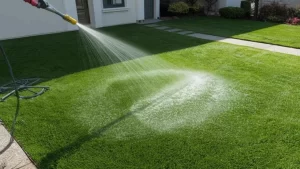
Gentle garden-hose rinse from high points toward drains. The goal is to float silt outward, not pressure-blast it downward.
Avoid high PSI. Power-washing ejects infill, frays fibers, and can lift seams whose adhesive softened in heat and moisture.
Step 3: Extract Fine Silt (If Present)
Wet-vac/extraction pass where you see a powdery film or muddy sheen. Silt is the enemy of drainage—it compacts in the thatch and perforations. Pull it out rather than pushing it through.
Step 4: Sanitize Intelligently
Apply a turf-safe, EPA-registered disinfectant at labeled dilution. Heavy rain leaves biofilm and organics; proper dwell time (often 5–10+ minutes) matters. Re-wet if sun breaks through early.
Rinse only if required by the label. Many modern products are no-rinse; always check.
Step 5: Groom & Re-Level
Power broom to stand fibers, open the thatch, and redistribute remaining infill. This reveals what’s cosmetic versus structural (ripples, edge lift, seam separation).
Step 6: Inspect Structure
Seams: look for straight-line gaps or misaligned gauge rows.
Edges: test with a putty knife; any slip-under indicates an adhesive or fastener issue.
Surface shape: shallow swales or crowns point to base movement; note locations.
When you’re ready for a city-specific routine, the Jupiter turf cleaning page outlines the local cadence we reference here—useful for setting calendar reminders for the rest of the season.
Fast Repairs After a Storm: What You Can Fix vs. When to Call Pros
Not every post-storm defect is a replacement problem. Most are repair-first candidates if addressed promptly.
1) Seam Re-Bond (Split Joints)
Sign: a zipper-like opening along a straight line; fibers may “mohawk.”
Fix: clean and dry the channel, slide non-woven seam tape underneath, butter both sides with urethane adhesive (leave a slim glue-free margin near the blade tips to avoid squeeze-up), align gauge rows, weight evenly, and respect cure windows.
Why now: moisture cycles and heat expansion worsen small splits quickly.
2) Ripples & Wrinkles (Re-Stretch + Re-Anchor)
Sign: waves that came with heat and moisture; sometimes localized to one edge.
Fix: lift the field near the ripple, correct the base shape if a high/low is present, then re-tension and anchor perimeters and stress zones at 6–8″ intervals. Power broom + infill lock the finish.
3) Edge Lift on Hardscape
Sign: a fingernail or putty knife slips under the edge near pavers or coping.
Fix: clean the bond line thoroughly; use urethane adhesive or a mechanical fastening strip designed for turf edges; weight during cure.
4) Infill Loss & Heat
Sign: fibers collapse, surface runs “hot,” odor builds in pet lanes.
Fix: top up infill to spec (often ~1.5–2.5 lb/sq ft depending on product), then groom to seat granules into the thatch. Consider blends with odor-binding media for dog runs.
5) Base Washout or Heave
Sign: soft or spongy sections, persistent puddling, visible low/high spots.
Fix: roll back the carpet, remove contaminated fines, rebuild with compacted angular stone and decomposed granite in thin lifts, maintain cross-slope to drains, re-stretch and anchor.
Note: this is the one to schedule soon; delaying invites seam stress and re-rippling.
For owners comparing methods and costs across the region, a concise overview of repair approaches (patching, re-stretching, seam reconstruction, base correction) is collected under South Florida turf repair.
Odor Control After Flooding or Prolonged Rain
Storms don’t just bring water—they mobilize organics. Odor tends to reappear a few days later if residues remain in the thatch or infill.
Cycle enzyme and oxidizer treatments. Enzymes dissolve uric and organic crystal matrices; oxidizers break biofilm. Alternate them two weeks apart in humid months.
Extract, don’t just rinse. If you can smell it after an enzyme dwell and hose-off, residues are deeper—use extraction to pull them out.
Mind the dwell time. Enzymes need time on wet fibers; don’t rush the rinse.
Infill matters. Odor-binding blends (e.g., zeolite-based) can help in dog lanes—especially after storms.
If you want a broader, multi-city view of cleaning routes and seasonal timing (handy if you split time between towns), the regional outline on turf cleaning across South Florida is a helpful reference.
Microclimates: Not Every Jupiter Yard Behaves the Same
Rooftop terraces: wind scours infill; anchor frequency and lightweight infills matter.
Shaded courtyards: slower drying → prioritize disinfection after rain.
Coastal exposures: salt haze and blown sand warrant gentler, more frequent rinsing.
Reflections: low-E and bright stucco can superheat blades between storm bands—screens or landscaping reduce risk.
Neighboring cities share similar issues with their own nuances; for comparisons and seasonal checklists nearby, see the notes under Palm Beach Gardens turf cleaning or, for denser cores and rooftop setups, the guide for West Palm Beach turf cleaning. South of us, pet-heavy yards often follow routines similar to Boca Raton turf cleaning during wet season peaks.
Documentation, Insurance & Warranties
If a named storm leaves meaningful damage:
Photograph everything before you move debris and again after cleaning. Capture seams, edges, base exposure, and any scorch or tear.
Save labels and invoices for adhesives, infills, and sanitizers used—warranty support often hinges on using appropriate materials.
Keep a maintenance log. Quarterly grooming and timely micro-repairs help demonstrate proper care if you ever seek warranty assistance.
A Lightweight Annual Calendar for Jupiter
January–March (Dry Season Tune-Up): deep groom; seam audit; infill optimization; edge re-sets; plan any elective repairs before summer.
April–June (Wet Season On-Ramp): increase enzyme frequency; pre-storm kit staged; check drains; avoid high-PSI washing.
July–September (Peak Storm Window): follow the post-storm sequence; alternate enzyme/oxidizer; top up infill; re-anchor edges; document.
October–December (Reset & Repair): comprehensive cleaning; re-stretch ripples; base corrections; perimeter detailing ahead of holiday traffic.
Turf Installation Services in Jupiter
If your research here confirms that the existing surface is past its best years—or you’re planning a new layout—remember that installation quality determines storm resilience. Proper sub-base compaction and grading, smart seam placement, and hardscape edge detailing prevent many of the issues this playbook covers. For a grounded look at product options and layout decisions specific to this area, explore Blue Ocean Turf’s artificial grass services in Jupiter, FL. Marry a solid install with the storm-ready habits above, and you’ll minimize repairs for seasons to come.
Frequently Asked Questions
Is pressure washing safe after a storm?
Use restraint. High PSI ejects infill, frays fibers, and can lift seams loosened by heat and moisture. A hose rinse, extraction for silt, and a power broom do a better job without collateral damage.
My turf smells worse two days after the rain—why?
Stormwater mobilizes organics that dry in the thatch. Odor often appears after sunshine returns. Alternate enzyme and oxidizer passes, allow full dwell time, then rinse and extract if needed.
How do I know if a ripple is surface tension or a base problem?
Pinch the ripple and tug gently. If it slides and flattens, re-stretching and anchoring may solve it. If it resists or springs back immediately, you likely need a base correction beneath that area.
Can I patch a small scorch from a grill ember?
Yes. Cut an oval around the damage, trace a donor piece with matching grain/gauge, use seam tape and urethane adhesive, weight during cure, and power broom to blend.
What’s the ideal post-storm cleaning order?
Debris removal → gentle rinse → extraction of fine silt (if present) → disinfect with turf-safe product at labeled dwell → power broom → inspect seams/edges/base shape.
How often should Jupiter homeowners deep-clean during wet season?
Most do well with a quarterly deep clean, with an extra mid-summer service if pets are heavy users or the yard is shaded and slow to dry.
Do disinfectants harm plants or pets nearby?
Turf-safe, EPA-registered products used at labeled dilution are designed for outdoor surfaces. We control overspray and follow label guidance on rinse/no-rinse to protect adjacent landscaping.
Why are my edges lifting near the pool coping?
Adhesive fatigue and water intrusion are common after a hot, wet season. Clean the bond line thoroughly and re-set with the right urethane or a mechanical edge strip; weight until cured.
What infill depth helps with heat and appearance?
Many residential systems target roughly 1.5–2.5 lb/sq ft, but check your product spec. Adequate infill supports blades (reducing matting), shades backing, and can reduce surface heat.
How long do storm-related repairs take?
Seam re-bonds and small patches are often same-day with cure windows before heavy use. Base corrections take longer since lifts must be compacted properly before the turf is re-stretched.
Book Fast, Storm-Smart Turf Service in Jupiter
Lock in resilience before the next system arrives. We bundle pre-storm brushing and edge checks with post-storm debris removal, gentle rinse/extraction, turf-safe disinfection, seam re-bonds, re-stretching, and infill top-ups—everything needed to protect appearance, drainage, and safety without a full replacement. Tell us your weather window and we’ll schedule a same-week visit so your lawn bounces back fast.