
Looking for reliable Turf Stain Removal on artificial grass? This guide explains why rust, tannins, sap, and grease appear, and how to clear them with safe, simple steps. Most stains do not require harsh chemicals or a full replacement. With a clear order of actions you can lift discoloration, protect the fibers, and keep the surface looking new.
This guide explains what causes the four most common stain families, how to treat them safely and what to do if stains reveal deeper issues like adhesive fatigue or base problems. You will also find prevention tips that reduce the time you spend scrubbing and the risk of making a spot worse.
How Turf Stains Happen and Why Order Matters
Artificial turf is a system made of blades and thatch stitched into a backing that sits on a compacted, free-draining base. Stains cling to different parts of this system. Iron from irrigation binds to the blade surface. Leaf tannins sink into the thatch. Grease coats the face of the fiber. Sap sticks and hardens.
The fastest recoveries follow a simple order. First remove loose material. Then pre-wet the area so chemicals spread evenly. Apply the correct cleaner and give it time to work. Agitate gently with a soft brush. Rinse to move residue off the field, not deeper into the thatch. Finish by grooming the fibers so the area blends with the rest of the lawn.
Two rules prevent most mistakes. Always test a small, hidden spot before treating the stain in full. Avoid high pressure washing because it ejects infill, roughens fibers and can open seams.
Rust and Irrigation Stains
What you see: Orange or reddish dots, arcs near irrigation heads or furniture feet, and a faint rusty veil where fine spray lands on sunny days.
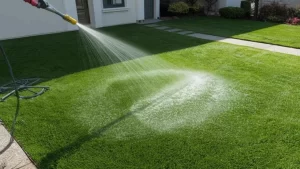
Why it happens: Iron in well water, metal furniture or garden tools oxidizes on the warm fiber surface. Sun and heat speed the reaction. The longer it bakes, the harder it is to remove.
How to remove it:
- Pre-wet the area with a gentle hose so the cleaner spreads evenly.
- Apply a turf-safe rust and mineral remover according to the label. Do not use abrasive pads or wire brushes.
- Let it dwell. Chemistry needs time. If it starts to dry, lightly re-wet so the product can keep working.
- Agitate with a soft nylon brush. Keep strokes short and even.
- Rinse from the top of the slope toward drains so dissolved iron moves off the lawn.
- Repeat if needed rather than scrubbing harder.
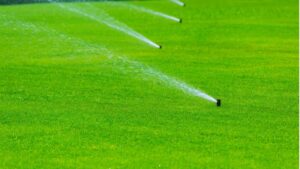
Prevention: Rinse after any irrigation session that visibly mists the lawn. Place non staining pads under metal furniture. Adjust sprinkler heads so they do not overspray the turf.
When to get help: If a wide area shows rust veil or if iron deposits mix with silt after storms, a professional deep clean can reset the field without damaging fibers. For a broader look at scheduling and methods, see this overview of turf cleaning in South Florida.
Leaf Tannins and Other Organic Stains
What you see: Tea colored prints where leaves sat, darker blotches under ficus or oak canopies, and faint brown drips after yard work.
Why it happens: Leaves and fruit release tannins that bind to the fiber. Shade and humidity slow drying and give stains more time to set.
How to remove it:
- Remove all remaining leaves and debris first.
- Pre-wet the area.
- Use a turf safe tannin or organic stain remover, or mix a mild neutral detergent with warm water.
- Allow dwell time so the cleaner can loosen the stain.
- Gently brush and rinse. Work in small sections so residues do not dry back on the fiber.
- If stains remain, repeat with a little longer dwell rather than greater force.
Prevention: Blow or sweep leaves promptly. During peak drop, place a reminder on your calendar to do a quick pass after windy afternoons. A monthly light groom helps prevent organic film from building up in the thatch.
Tree Sap and Sticky Residues
What you see: Shiny spots that feel tacky, often under palms or along fence lines. Sap holds dust, which makes the area look dull and dirty.
Why it happens: Sticky plant resins land on warm fibers and cure. Sunscreen and resin based adhesives can create similar patches.
How to remove it:
- Start with the least aggressive option. Pre-wet and try a mild turf detergent.
- If the spot is still sticky, dab with a microfiber cloth lightly moistened with isopropyl alcohol. Work from the outside inward to avoid spreading.
- For stubborn resin, a turf safe citrus based cleaner can help. Use gentle pressure and short strokes.
- Rinse thoroughly and groom so the blades stand upright again.
Important cautions: Do not flood solvents. Excessive use can weaken backing or discolor fibers. Always test first in a hidden area and use the smallest amount that works.
When cleaning is not enough: If sap was heated and fused fibers together, or if backing feels soft, the material may be damaged rather than stained. In that case, a small beveled patch or a seam re bond is the right fix. For a clear explanation of repair options across the region, review this summary of turf repair in South Florida.
Grease, Oil and Sunscreen
What you see: Dark smudges near the grill, shiny fingerprints on blades near lounge chairs or a dull patch where sunscreen met hot fibers.
Why it happens: Oils coat the fiber and attract dust. On warm surfaces they penetrate the thatch and cling.
How to remove it:
- Blot fresh spills. Use paper towels, clean rags or an absorbent like cornstarch or unscented kitty litter. Give the absorbent ten to fifteen minutes, then lift it away.
- Mix warm water with a mild dish detergent. Apply and agitate gently with a soft brush.
- Rinse and repeat as needed. Each cycle lifts more of the residue.
- For stubborn grease, step up to a turf safe degreaser at the labeled dilution.
- Rinse carefully and groom to blend the fiber lay with the rest of the field.
Prevention: Place a mat under grills. Wipe sunscreen from hands before lounging on the lawn. Keep a small absorbent and a soft brush in your outdoor kit so you can respond quickly.
Mineral Haze and Salt Film
Coastal wind and reclaimed water can leave a white cast that dulls color. Mist the area, apply a turf safe mineral remover, let it dwell briefly and rinse. If haze returns quickly, add a monthly pass to your routine and consider adjusting irrigation to reduce overspray.
Aftercare: Grooming and Infill
Every cleaning session should end with a quick groom. Brushing lifts flattened fibers so they reflect light like the surrounding area. Power brooming on a low, even setting is ideal for traffic lanes. Check infill depth. If you can part the blades with your fingers and see backing, broadcast a small top up and groom again so granules settle into the thatch. Adequate infill helps blades stand, protects the backing and reduces heat.
When Stains Reveal Deeper Issues
If spots came with ripples, lifted edges or a seam that opened, address the structure. Re stretching and anchoring corrects ripples that return after heat and humidity. A clean cut and re bond brings split seams back together. Edge resets on hardscape stop dirt and water from migrating under the carpet. If you notice these issues around pool decks or in high sun areas and you live near the coast, a local primer on small fixes is available here for turf repair in Jupiter.
When a Pro Cleaning Saves Time
Some situations are faster with professional equipment. Examples include silt after flooding, large fields of mineral haze, or odors that persist after careful enzyme work. If you maintain a home in a coastal town and want a seasonal reset that pairs extraction with grooming, you can read about the cadence many owners follow for turf cleaning in Jupiter and adapt that rhythm to your own yard.
Thinking About Starting Fresh With New Turf
A better long term fix when cleaning will not restore the look
There are times when stains are only part of the story. If fibers are brittle across the site, if backing is cracked or if the base holds water even after careful cleaning, a fresh installation may be smarter than repeated spot work. A well built system with proper base compaction, smart seam layout and clean edge details resists staining and cleans faster. If you are considering replacement or a swap to a pet friendly product, this overview of artificial grass installation options will help you compare products, infills and layouts before you decide.
Frequently Asked Questions
1. Will rust stains permanently damage artificial grass fibers
Light to moderate rust does not usually harm the fiber. It sits on the surface and lifts with the right cleaner and dwell time. Deeply baked deposits can take more than one pass. Avoid abrasive pads that can scuff the blade face.
2. Can I use kitchen vinegar for tannin stains
A mild detergent solution is safer for turf backing and nearby plants. Some tannin removers are formulated for synthetic surfaces and work better than home remedies. Always test first in a hidden spot.
3. How do I get sunscreen off turf without hurting the color
Blot any fresh residue, then wash with warm water and a small amount of dish detergent. Rinse and repeat. If a sheen remains, a turf safe degreaser at the labeled dilution usually removes it. Finish by grooming.
4. Is pressure washing ever a good idea for stain removal
High pressure removes infill and can open seams, which creates bigger problems than a stain. A gentle hose rinse, the correct cleaner and a power broom are safer and more effective for synthetic grass.
5. What if a stain area also smells like pets even after enzyme treatment
Odor often means residues are still in the thatch or infill. Alternate enzyme and oxidizer cycles with proper dwell times. If smell returns later, extraction may be needed to pull out fines. Widespread odor can benefit from a professional deep clean schedule.
Talk to Bright Turf Solutions
Book a stain reset or ask for a quick assessment
If you are facing a stubborn stain, a patch that will not blend or a section that smells a day after every rain, it helps to talk it through with a technician. Share a photo and a short description and we will suggest the simplest path that protects your turf and your time.