Puddle-Free Artificial Grass starts with simple habits and smart diagnostics. When water drains through the backing and base without obstruction, odors fade, fibers stay upright, and the lawn is usable minutes after rain. This guide shows how to run quick DIY drainage tests, interpret what they reveal, and choose base repairs that restore fast drying and long-term durability.
This guide walks you through what healthy drainage looks like, why puddles form, how to run practical at-home tests, and which fixes deliver the biggest wins. You will also find when to call in a professional for deep cleaning, seam or edge work, and base corrections.
What Efficient Turf Drainage Looks Like
A modern turf system drains vertically through perforations in the backing and laterally through the compacted base. When it is working, water disappears in seconds and does not move fibers or infill around. You should not see film or silt collecting in the thatch. After a quick brush, the surface should feel springy, not spongy. If any of these signals are missing, start with a small audit.
The Usual Suspects Behind Puddles
- Silt in the thatch or backing
Windblown dust, soil from planters, and organic debris can migrate into the thatch. Over time this fines layer clogs perforations and slows drainage. - Compacted or uneven base
Traffic, furniture, and water can compact the sub-base. Low spots collect water and high spots telegraph into ripples. Turf mirrors the shape beneath it. - Infill loss or migration
If infill is light, blades mat and trap moisture. If infill migrates into lanes or off the field, you will see bare patches and stagnant zones. - Seam and edge gaps
A lifted edge or tired seam lets water, silt, and organics creep underneath. The surface then bubbles or puddles nearby. - Runoff and poor slope
Downspouts that empty onto the lawn or borders that dam water along one edge can overwhelm an otherwise sound installation.
A 20 Minute DIY Drainage Audit
You do not need specialty tools to learn a lot about your lawn. Try this sequence.
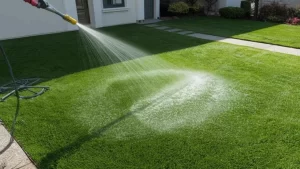
Hose test
Pick a high corner and run a gentle flow. Healthy turf will drink the water almost immediately. If you see pooling within 10 to 15 seconds, note the spot.
White towel swipe
After a dry afternoon, rub a clean towel over a traffic lane. A gray or brown smear suggests biofilm or fines that need removal. Clean fibers leave little residue.
Straightedge check
Lay a 4 to 6 foot straight board across suspect areas. Visible daylight under the board or rocking indicates a high or low. This is a base clue.
Infill depth feel
Part the fibers with fingers. If you can feel backing easily, you likely need a top up. Proper depth supports blades and improves drainage.
Edge and seam probe
Slide a putty knife gently at borders and along visible seams. If the blade slips under the carpet, you probably have a bond issue that invites water and silt intrusion.
Gutter and border review
Trace downspouts and hardscape transitions. If mulch beds or edgers hold water along one side of the lawn, add this to your fix list.
First-Line Fixes You Can Do Today
Start with the surface. If symptoms persist after these steps, you will know it is time for structural work.
Debris removal
Collect leaves, palm seeds, and windblown grit. Lift large debris straight up rather than dragging. A light blower helps, but keep the nozzle above the thatch.
Gentle rinse
Use a garden hose to float fines toward drains. Avoid high pressure washing. Strong jets eject infill, scuff fibers, and sometimes open seams.
Extraction if silt is present
A wet vacuum or extraction tool pulls fine particles out of the thatch rather than forcing them down. If your white towel test was grimy, extraction matters.
Enzyme then oxidizer cycle for pet areas
Enzymes dissolve urine crystals. Oxidizers loosen biofilm. Alternate them over two weeks during humid months. Always honor the labeled dwell time before rinsing.
Brush and re-level
A stiff broom or power broom stands fibers and redistributes infill. Grooming exposes the true surface, which makes ripples, lows, and seam issues easier to spot.
If you would prefer a city specific deep clean that includes grooming, odor control, and careful rinsing, this guide to turf cleaning in West Palm Beach explains the cadence many homeowners follow. For readers a little farther south, a similar seasonal checklist is available for turf cleaning in Boca Raton as well. Each page outlines a routine you can mirror at home or schedule professionally.
When the Base Needs Attention
Surface care cannot fix a base that has settled, heaved, or become contaminated with fines. If your straightedge rocks across high and low spots, or if water consistently finds the same shallow basin, move to base work.
Open the surface
Roll back the turf gently. Bag and set aside clean infill for reuse. Vacuum silt so you are not building on top of it.
Rebuild in thin lifts
Use angular stone and a decomposed granite or similar fines blend. Compact in thin layers. Aim for a consistent cross slope toward drain paths.
Geotextile separation if soils are soft
A simple fabric layer helps keep the new base from pumping into native soil during wet periods.
Return and tension the carpet
Stretch the turf evenly and re-anchor perimeters and stress zones at regular intervals. Groom and top up infill to the product specification.
Edge re-sets
Clean the bond line at concrete or paver borders. Use a quality urethane adhesive or a mechanical edge strip. Weight and allow a full cure before traffic.
If you want an overview of common repair methods, including seam reconstruction, re-stretching, and base correction, the local pages for turf repair in West Palm Beach and turf repair in Boca Raton summarize the approaches most homeowners end up choosing after heavy rains.
Small Decisions That Prevent Big Puddles
Protect the drainage path
Keep planters on saucers and do not let potting soil spill into the thatch. After storms, remove debris first, then rinse, then groom. The order matters.
Respect slope
Even a slight back pitch can hold water along a border. If you add hardscape later, re-check that the turf still slopes toward drains.
Mind the heat
Intense reflections can soften adhesives. If your lawn sits near low E glass or bright stucco, consider screens or landscaping to reduce hot spots that stress seams.
Keep infill at spec
Infill depth affects more than feel. It shades the backing, supports blades, and slows fines from settling into perforations.
A Simple Drainage Maintenance Calendar
Quarterly
Deep groom the full surface. Run the hose test and white towel swipe. Top up infill where backing is easy to feel. Check edges and seams.
After major storms
Follow this sequence. Debris removal. Gentle rinse. Extraction if you see silt. Disinfect where water pooled. Groom. Inspect structure. Document any hot spots for later repair.
Any time odors appear
Alternate enzyme and oxidizer applications across two weeks and respect dwell times. Persistent odor after that likely means it is time to extract or look under the surface.
When Replacement Starts To Make Sense
If fibers are brittle across the entire lawn, if the backing is cracking in many places, or if the base has widespread failure, a full replacement can be more cost effective than patchwork. Make this a measured decision. Many lawns with three or four defects repair beautifully and go on for years.
Considering a Fresh Start The Case for Professional Installation
When the surface is reaching the end of its design life, a well planned installation sets you up for many trouble free seasons. A professional crew will choose the right base materials, compact in thin lifts, plan seam routes that avoid traffic lines, detail edges to match nearby hardscape, and dial in infill for your use pattern. If you are comparing products and layout options, the overview at Blue Ocean Turf’s artificial grass in Boca Raton is a helpful primer on turf styles and design choices. Pair a solid install with the drainage habits above and puddles stop being part of your routine.
Frequently Asked Questions
1. Can I fix puddles with more infill alone
Sometimes. If the surface is slightly low and infill was light, a top up plus thorough grooming can restore even support. If the base has settled, extra infill will not correct the underlying shape.
2. Is pressure washing ever safe on turf
Use caution. High pressure can eject infill and lift seams. A hose rinse, extraction for fines, and grooming usually deliver better results without collateral damage.
3. How do I know if silt is my main problem
The white towel swipe is a simple indicator. If it comes up gray or brown on a dry day, you likely have film and fines in the thatch that need removal before you judge the base.
4. What is the right infill depth Check your product spec.
Many residential systems perform well around one and a half to two and a half pounds per square foot. If you can see or feel backing easily, you are probably light.
5. Why do ripples return after I flatten them
Flattening only moves the symptom. If the base is uneven or the field is not tensioned and anchored correctly, ripples tend to reappear. Re-stretching after a base touch up is the durable fix.
Talk With a Drainage Pro Who Fixes Puddles Fast
Bright Turf Solutions can help you move from constant mopping to a lawn that dries in minutes. If you are ready to schedule a drainage audit, deep clean, or a quick structural repair, contact the team today and tell us what you are seeing. We will map the fastest path back to a dry, safe surface.