Your artificial lawn should look flawless year-round—even with Boca Raton’s heat, humidity, and coastal salt in the air. If you’re seeing split seams, ripples, burn marks, or pet-related damage, you don’t have to tear everything out and start over. Most issues can be repaired quickly and affordably with the right approach, tools, and materials. This playbook shows you exactly how to diagnose problems, choose the correct repair method, and maintain your turf so it stays safe, springy, and great-looking for years.
Bright Turf Solutions specializes in repair-first solutions that extend the life of your turf and protect your investment. If you’re pairing repairs with sanitation or grooming, consider a once-over by our local team for a freshly restored look—especially after big fixes or storm season. For a post-repair refresh right here in town, book turf cleaning in Boca Raton to lift fibers, redistribute infill, and remove adhesive dust or debris.
What Fails—and Why
1) Seam splits.
Seams open when adhesives fail from UV exposure, water intrusion, or improper cure times. Heavy foot traffic, carts, or heat expansion also tug on joints.
2) Ripples and wrinkles.
Thermal expansion, insufficient perimeter fastening, or base movement creates undulations. Shade–sun cycles and afternoon downpours magnify the effect.
3) Burns and melted blades.
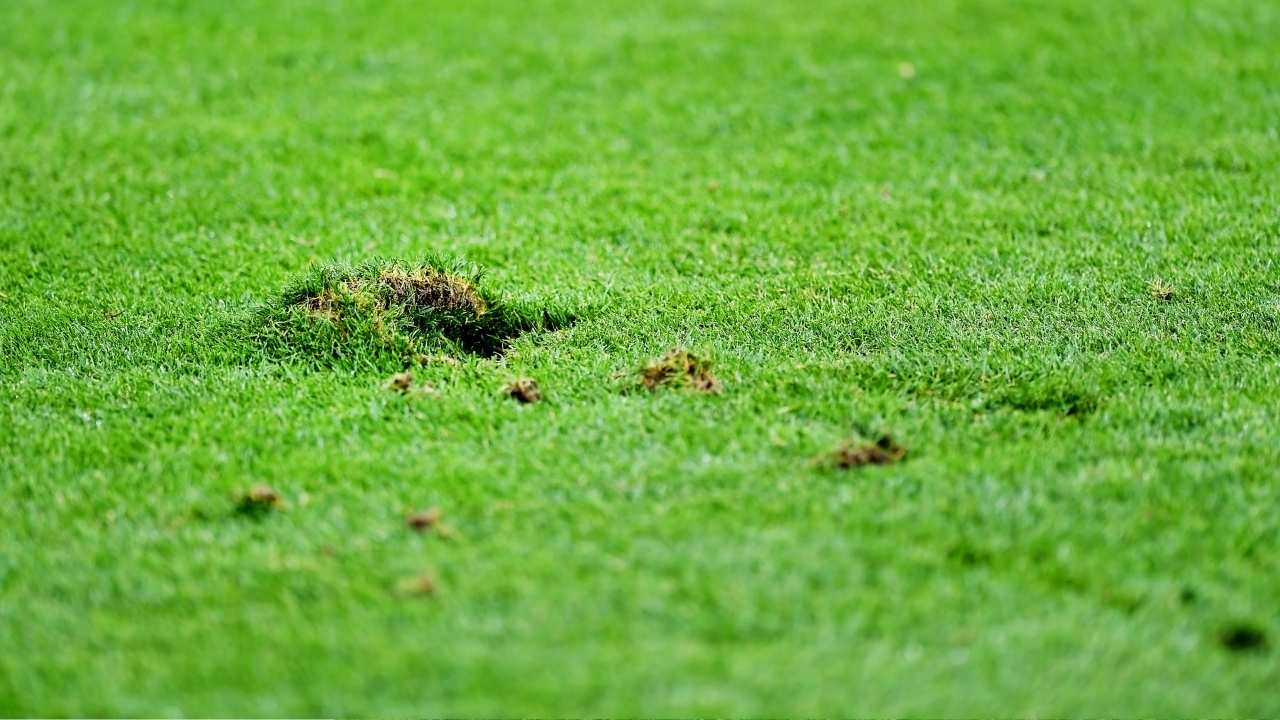
Hot charcoal, fireworks, dropped tools, or even low-E window reflections can pucker fibers and fuse thatch. Grills and patio heaters are frequent culprits.
4) Pet damage.
Urine crystallizes in the infill (odor), dogs dig at edges and seams, and high-traffic pet lanes mat fibers flat. Over time, repeated rinsing can float infill away.
5) Settled or heaved base.
Standing water, compromised sub-grade, or poor compaction leads to dips or humps. The turf mirrors the base: if the base moves, your lawn telegraphs it.
6) Edge lift and trip points.
Curbs, pavers, or concrete borders can separate from the turf edge. Wind, mowers, and foot traffic catch lifted edges and make the problem worse.
7) Infill loss.
Wind, aggressive pressure washing, or pet rinsing reduces infill depth, causing matting, faster wear, and more heat retention.
Rapid Diagnosis Checklist
Use this 5-minute inspection to decide the right fix:
Follow the line: If gaps follow a straight seam line, it’s an adhesive failure—not a blade tear.
Pinch test: Grab a ripple and gently pinch-pull. If it moves easily, the issue is insufficient anchoring; if it barely moves, suspect base swell/settlement.
Fiber sheen and smell: Shiny, flattened fibers with persistent odor point to infill loss + pet residues.
Edge probe: Slide a putty knife under edges. If it slips in, you’ve got edge lift or adhesive failure to hardscape.
Spot heat check: Plasticky, fused, or puckered spots indicate thermal damage that needs patching, not just cleaning.
If anything also smells off or feels slimy after rain, add sanitation to your plan. For multi-city properties or storm response, our South Florida turf cleaning route can bundle disinfection with grooming.
Tools & Materials for Professional-Grade Repairs
Turf seam tape (non-woven, heavy-duty)
Two-part urethane seam adhesive or premium turf glue
Weighting boards (plywood strips) and sandbags for curing
6–8 in. turf nails or composite spikes; stainless screws with washers for borders
Broom/power broom and turf rake for grooming
Infill (silica, coated sand, TPE, or zeolite/antimicrobial blends)
Utility knife with hook blades, straightedge, chalk line
Plate compactor or hand tamper for base corrections
Geotextile fabric, crushed angular stone (#57), and decomposed granite for sub-base fixes
Color-matched patch piece from attic stock or donor remnant
Solvent cleaner for glue residue (turf-safe)
Repairs, Step by Step
A) Seam Re-Bond (Split Joints)
Expose the seam. Gently pull fibers back and vacuum debris.
Dry & prep. Ensure the base is dry. Remove old glue and loose strands.
Lay tape. Center seam tape adhesive-side up beneath the joint.
Glue correctly. Butter both sides with urethane adhesive; maintain a ½–¾ in. glue-free margin at blade tips to prevent squeeze-up.
Close with alignment. Marry both edges so blade direction and gauge match (avoid a “mohawk” line).
Weight & cure. Use boards and sandbags along the seam for the manufacturer’s cure time.
Groom. Brush up fibers to hide the seam.
Pro tip: Avoid S-curves; cut seams in straight, clean lines for invisible joints.
B) Ripple & Wrinkle Removal (Re-Stretch + Re-Anchor)
Identify anchor points. Check perimeters and interior nails.
Release tension. Carefully lift the turf near the ripple; do not yank.
Correct the base. If the sub-base is high/low, regrade and compact to a uniform slope.
Re-stretch. Pull the turf taut in the direction of the ripple, working from the center out.
Re-anchor. Add spikes or adhesive at 6–8 in. intervals around perimeters and stress zones.
Groom and infill. Power broom and top up infill to lock fibers upright.
C) Burn/Melt Patch (Invisible Spot Repair)
Trim the wound. Cut a football-shaped (oval) area around the damaged spot with clean, beveled edges.
Trace a donor piece. Use the cutout as a template on a matching remnant; align the grain and face direction.
Tape & glue. Lay seam tape under the opening, apply adhesive, set the patch, and weight it.
Feather the blades. After curing, brush aggressively to blend. Top with infill to level.
Pro tip: Patch boundaries disappear best with a long, beveled cut and exact blade alignment.
D) Pet Damage & Odor Reset (Repair + Sanitation)
Lift + flush. If odor is severe, gently lift sections, rinse through the thatch, and extract to waste.
Enzyme + oxidizer cycle. Treat fibers and infill to dissolve uric crystals and biofilm.
Replace infill. Install a fresh, antimicrobial or odor-binding infill (e.g., zeolite blend) to the specified depth.
Re-anchor and groom. Lock edges, brush fibers, and verify drainage.
If you maintain rental or vacation homes north of us, our neighbors can book turf cleaning in Jupiter for the same pet-focused deep clean and grooming.
E) Base Settlement Corrections (The Foundation Fix)
Open the surface. Roll back turf and remove old infill from the area.
Rebuild the sub-base. Add compacted lifts of angular stone and DG, maintaining cross-slope to drains.
Geotextile layer. Install fabric to separate soils and reduce pumping.
Reconnect & stretch. Return the turf, stretch flat, and re-anchor.
Top up infill. Restore infill depth; power broom to finish.
F) Edge Resets on Hardscape
Clean the bond line. Grind or wire-brush the edge of concrete/pavers.
Adhesive bead or fastening strip. Use urethane adhesive or a mechanical strip designed for turf edges.
Set and weight. Maintain even pressure while curing; avoid traffic for the full cure.
G) Infill Top-Up & Surface Restoration
Depth target: Most systems need ~1.5–2.5 lb/sq ft (varies by product).
How to apply: Broadcast evenly, then power broom to sink granules into the thatch and stand fibers.
Why it matters: Proper infill reduces heat, cushions steps, protects backing, and keeps blades upright—hiding seams and patches.
When to Repair vs. Replace
Repair if:
Damage is localized (≤15–20% of surface)
Backing is intact, and drainage works
The product is still under reasonable wear years and matches available remnants
Replace if:
Widespread fiber UV degradation (brittle, faded, split blades)
Backing is cracked, delaminated, or porous seams are failing everywhere
The base is failing site-wide (chronic puddling, pervasive settlement)
When in doubt, we’ll evaluate on-site and prioritize repair-first options that make financial sense. If you manage properties across the county, our turf repair service for South Florida can coordinate multi-site visits on one route.
Maintenance That Prevents Repeat Failures
Quarterly grooming. Power brooming stands fibers up, hides repairs, and redistributes infill that migrates during rinsing or storms.
Perimeter check. Every 60–90 days, walk edges for lift and add anchors before a snag becomes a tear.
Hose, don’t blast. Avoid high-PSI pressure washing that ejects infill and lifts seams.
Pet protocol. Weekly enzyme rinse in heavy-use lanes; monthly oxidizer pass for deep odor control.
Storm watch. Before big systems, clear the turf; after, rinse silt away and inspect seams.
Shade hygiene. In humid pockets, disinfect lightly to prevent mildew film.
Window reflection audit. If you see concentrated heat zones, install screens or film to block scorching reflections.
If you split time between neighborhoods, our nearby pages outline local cleaning routes for quick scheduling: Palm Beach Gardens turf cleaning and West Palm Beach turf cleaning.
Cost Factors (What Drives Pricing)
While every project is unique, pricing is influenced by:
Repair type & complexity: Seam re-bonds and small patches cost less than base reconstruction.
Access & logistics: Rooftops, narrow side yards, or heavy furniture relocation add time.
Material match: Older SKUs require careful patch matching; donor pieces help.
Sanitation add-ons: Enzyme/oxidizer cycles and disinfecting increase scope but are vital for pet areas.
Storm recovery: Debris removal and drainage clearing can be bundled with structural fixes.
Transparent quotes come after a short site visit. The goal is simple: the least invasive fix that restores safety, drainage, and appearance.
Storm & Flood Recovery: Repair + Sanitize
After summer squalls or king tides, the right sequence matters:
Debris removal first (no dragging across blades).
Rinse and extraction to remove silt, salt, and organics.
Disinfection with turf-safe products at proper dwell times.
Structural assessment for seam integrity, edge lift, and base movement.
Repairs + grooming to finish.
If you maintain multiple homes along the coast, consider routing a deep clean with our South Florida turf cleaning team to keep timelines tight and results consistent.
Turf Installation Services in Boca Raton
If your lawn is past its service life or you’re designing a new outdoor space, quality installation determines how often you’ll need repairs later. Proper sub-base compaction, drainage planning, seam layout, and edge details dramatically reduce ripples, lifts, and odors over time. For full turf installation services in Boca Raton, explore Blue Ocean Turf’s artificial grass solutions—and when it’s time for annual maintenance or the occasional fix, Bright Turf Solutions can keep your new surface performing like day one.
Frequently Asked Questions
Can you fix seams without visible lines?
Yes—when fibers are aligned and the cut follows straight gauge rows, modern adhesives plus careful weighting make seams virtually invisible. Post-repair power brooming and infill leveling are key to blending.
What causes wrinkles to come back after I flatten them?
If the turf wasn’t re-stretched and re-anchored—or the base wasn’t corrected—wrinkles can reappear with heat cycles. Long-term fixes address both anchoring and sub-base shape, not just the surface.
Will a burn spot always need a patch?
Any area where blades are fused or backing is compromised should be patched. Surface singes without deformation sometimes polish out, but true heat damage needs a cut-and-replace.
How do you eliminate pet odors for good?
We dissolve uric crystals with targeted enzymes, break down biofilm with oxidizers, replace or top up infill, and ensure drainage. Maintenance rinses and periodic grooming keep odors from rebuilding.
Can you repair turf around pools and on rooftops?
Absolutely. We use adhesives and fasteners rated for hardscape edges, manage overspray carefully, and protect drains. Rooftops may require specific fastening systems and lightweight infills.
How long do repairs take and how soon can I use the area?
Most seam and patch repairs are completed the same day. Adhesives generally require a cure window before heavy use; light foot traffic is often fine after initial set. We’ll advise onsite.
Do you color-match older turf for patches?
We do our best with donor pieces and careful blade direction. Even with aging, a well-aligned, beveled patch becomes very hard to spot after grooming and a few weeks of weathering.
Why does my turf smell again after heavy rain?
Stormwater can mobilize hidden residues. A deep extraction and disinfection cycle resets the surface; keeping infill at spec and scheduling routine grooming prevents recurrence.
What can I do to prevent edges from lifting again?
Use the correct adhesive or fastening strip for the substrate, maintain perimeter anchoring intervals, and avoid prying with tools or mower wheels. Quick checks every couple of months help.
Do repairs void the original product warranty?
Quality, manufacturer-approved repair methods usually preserve warranty coverage on unaffected areas. We document the process and use appropriate materials to keep your warranty intact.
Straightforward Next Step
If your turf has seams opening, ripples forming, or pet lanes that won’t stay fresh, schedule an assessment and we’ll map the fastest, most economical fix—often same-week.